
AI video production has moved from novelty to default. In 2026, a single marketer with a brief, a script, and the right AI stack can ship a launch-ready 60-second ad in 48 hours — at roughly one-tenth of what the same spot cost in 2023. This guide is the practical playbook: how the new pipeline works, what it costs, where it still falls short, and how to choose a production partner who knows the difference between an AI shortcut and an AI workflow.
TL;DR
- AI video production is the use of generative AI models for scripting, storyboarding, footage generation, voice, music, and editing — in one connected pipeline.
- Turnaround is roughly 3× faster and cost is typically 40–80% lower than traditional production for comparable output.
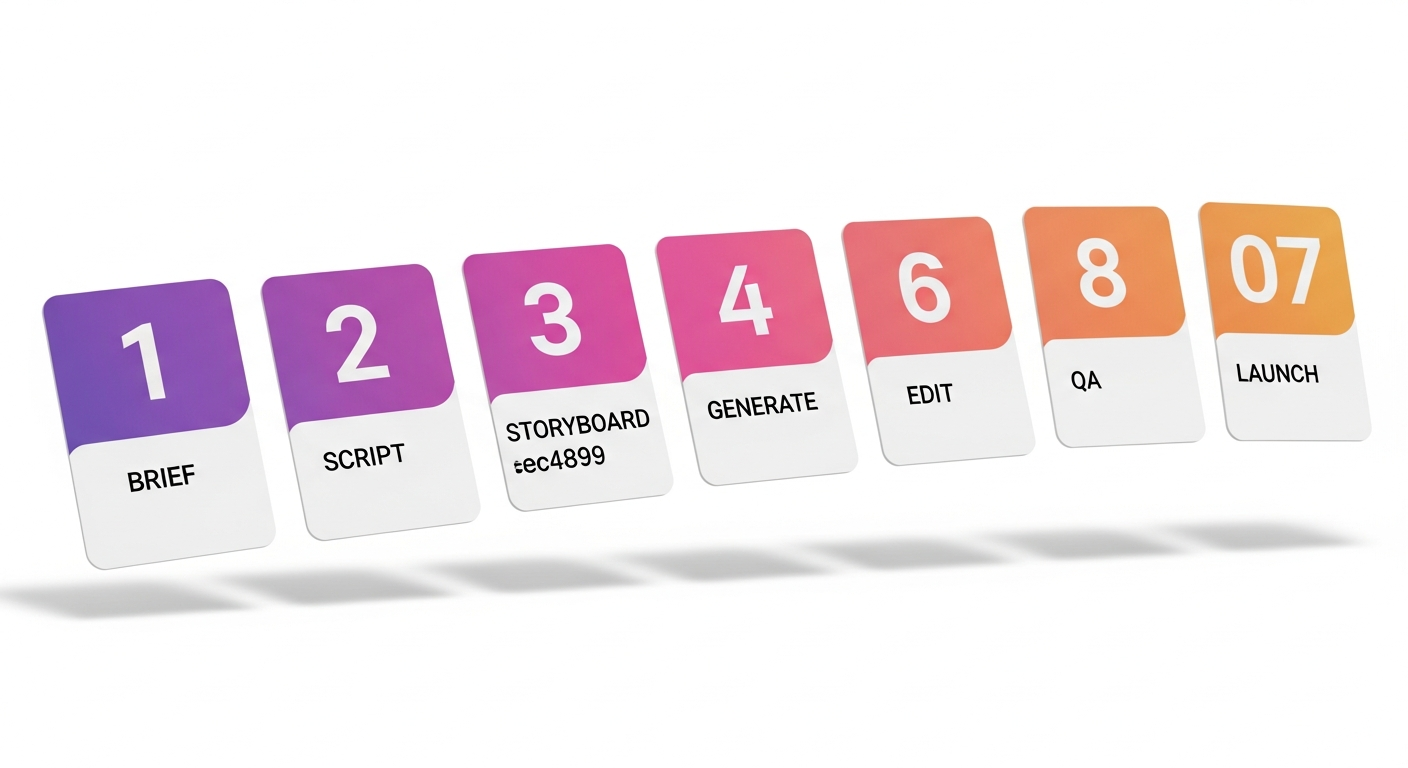
- The 2026 stack covers five stages: brief, pre-production, generation, post, distribution.
- AI excels at high-volume marketing, social, explainer, and product video. It still needs human craft for emotional storytelling, brand-defining hero spots, and complex live action.
- Pick a partner who has a documented AI workflow, named tools, a rights-and-disclosure policy, and a portfolio of shipped work — not just demo reels.
What is AI video production?
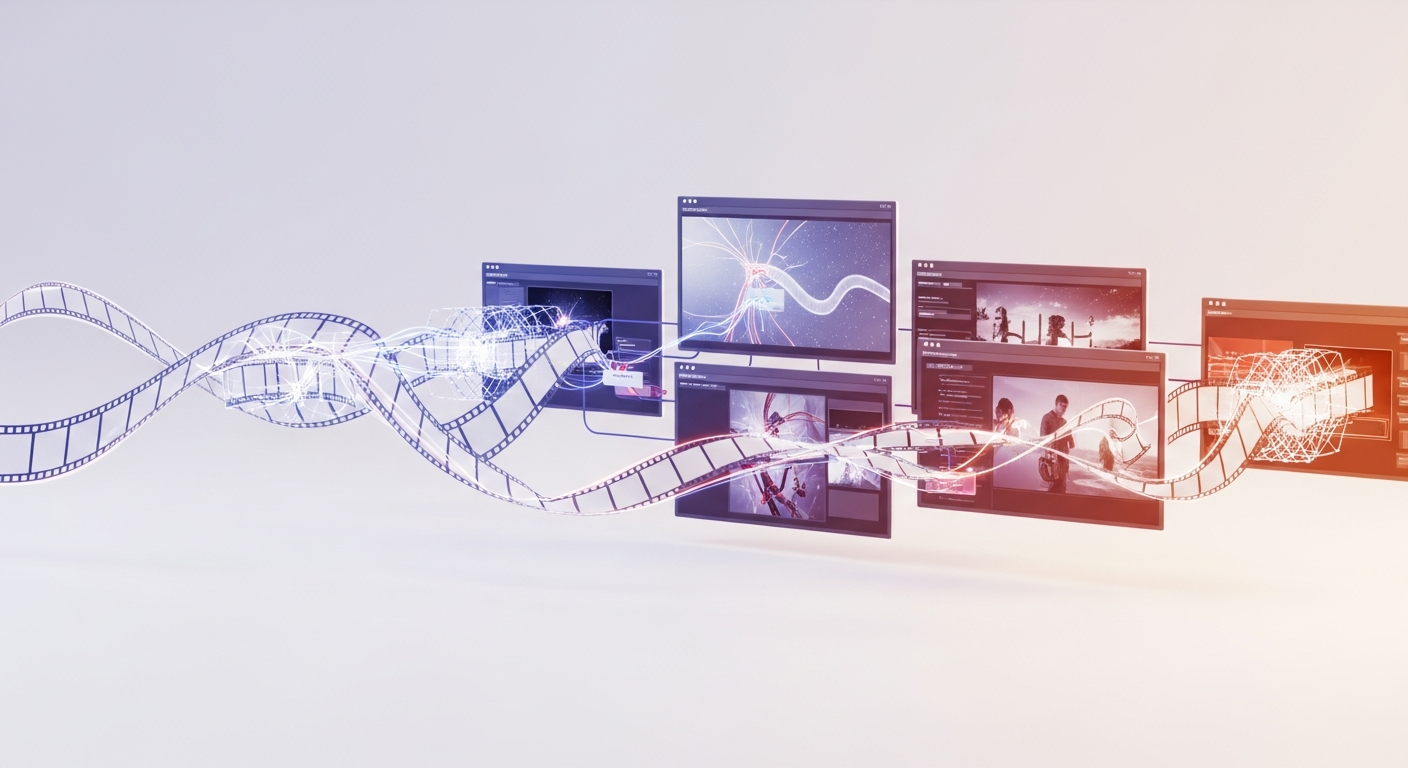
AI video production is the end-to-end use of generative artificial intelligence across the video creation pipeline — from idea to deliverable. Instead of running each stage with a separate team and toolset, an AI-first studio chains specialist models together: a language model drafts the script, a storyboard model frames the shots, a video model generates footage, a voice model performs the narration, an audio model scores the track, and an edit model assembles the cut.
The shift isn’t just about speed. It changes the shape of what’s possible to make. A campaign that used to ship one hero video now ships fifty cuts — one per audience segment, language, and channel. A product launch that needed a four-week production schedule fits inside a four-day sprint. The economics open up video to teams that previously could not afford it.
Three definitions worth being precise about, because they get conflated everywhere:
- AI-generated video — every frame produced by a generative model (e.g. Sora, Veo, Runway, Kling).
- AI-assisted video — live-action or motion-graphic footage with AI in the workflow (rotoscoping, color, voice cloning, dubbing).
- AI video production — the broader practice, which usually blends both.
When this article (and most working professionals) says “AI video production,” it means the third — a hybrid pipeline where AI shows up at every stage but humans still own creative direction and final delivery.
How AI changes the video production pipeline (the 5 stages)
The traditional pipeline — brief, pre-production, production, post, distribution — survives in 2026. What changes is who (or what) does the work inside each box, and how long the boxes take.
Stage 1 · Brief & strategy
This is the one stage that hasn’t been disrupted — and shouldn’t be. AI can’t tell you what your brand stands for, who you’re trying to reach, or what action you need them to take. A solid creative brief still drives the entire downstream pipeline. The difference: with AI in the picture, the brief gets tighter, because every word in it will be interpreted literally by a model.
Stage 2 · Pre-production (script, storyboard, shot list)
Where the brief used to spend two weeks bouncing through scriptwriters and storyboard artists, it now takes a day. Modern AI writers like GPT-class and Claude-class models draft scripts in seconds; visual models like Midjourney, Stable Diffusion, and Imagen produce hundreds of storyboard frames in minutes. Humans still curate, but they curate from an abundance rather than building from scratch.
For a step-by-step walkthrough of this stage, see How to create AI marketing videos: a 7-step process.
Stage 3 · Generation (footage, voice, music)
The headline change. Generative video models can now produce minute-long, photorealistic clips from a text prompt or a reference image. Voice models can clone a brand voice in three minutes of training audio and deliver narration in 40+ languages. AI music tools like Suno and Udio compose original scores that pass commercial-use licensing.
What’s not yet solved: long-form coherence (most models drift after ~10 seconds), perfect character consistency across shots, and certain physical effects (fluid dynamics, complex hands, dense crowds). Studios solve this with hybrid workflows — generate the easy 80%, shoot or composite the rest.
Stage 4 · Post-production
AI in post is the unsung win. Color grading suggestions in DaVinci Resolve, automatic rotoscoping in After Effects, AI-driven captions and dubs across languages, denoising and upscaling — all of these compress what used to be a week of finishing into hours. This is also where most “traditional” agencies have quietly adopted AI without rebranding as “AI studios.”
Stage 5 · Distribution & iteration
AI’s most underrated impact is here. Once you’ve built the assets, you can spin out variants — vertical for Reels, square for feed, landscape for YouTube, 6-second for pre-roll, 30-second for Connected TV — with edit models that auto-recompose for each aspect ratio and length. Then performance data feeds back into the next round of script generation. The feedback loop, which used to be quarterly, becomes weekly.
AI video production by use case
Not every kind of video is equally well-served by AI today. Here’s an honest 2026 view of where it shines, where it’s adequate, and where you still want a camera and a crew.
| Use case | AI suitability | Why |
|---|---|---|
| Marketing & performance ads | Excellent | High volume, short format, easy A/B testing |
| Instagram Reels & Shorts | Excellent | 9:16, <60s, fast iteration favors AI |
| SaaS explainer videos | Excellent | UI screen capture + AI voiceover + motion graphics |
| E-commerce product videos | Very good | Templated formats, AI-generated B-roll, scaled per SKU |
| Brand films & hero spots | Mixed | Emotional storytelling still benefits from live action |
| Documentaries | Adequate | Great for B-roll & reenactment; primary interviews stay human |
| TV serials & long-form | Hybrid | VFX, pre-viz, and dubbing are AI; principal photography stays |
| Feature films | Tooling | AI is in the toolkit, not driving the picture (yet) |
For deeper dives by vertical, see AI explainer videos for SaaS and AI product videos for e-commerce.
The 2026 AI video production stack
A modern AI-first studio doesn’t run on one tool. It runs on a stack — usually 8 to 14 specialized models chained behind a producer’s workflow. The exact tools change month-to-month (this space moves fast), but the categories are stable:
- Scripting & ideation — Claude, GPT, Gemini for long-form scripts and ideation; specialized scriptwriters like Sudowrite for narrative.
- Storyboarding & concept art — Midjourney, Imagen, Ideogram, Stable Diffusion.
- Generative video — Sora, Veo, Runway Gen-3+, Kling, Luma Dream Machine, Pika.
- Voice & dubbing — ElevenLabs, PlayHT, Resemble for voice; HeyGen, Synthesia for talking-head video.
- Music & SFX — Suno, Udio for music; ElevenLabs SFX, Stable Audio for effects.
- Editing & assembly — Adobe Premiere with Firefly, DaVinci Resolve with AI tools, Descript for transcript-based edits, CapCut for social.
- Post & finishing — Topaz Video AI for upscale & denoise, Runway for inpainting, RotoBrush for masks.
- Distribution & A/B — Pencil, Omneky, VidIQ for variant generation and creative testing.
For tool-by-tool reviews focused on short-form, see 15 best AI video tools for Instagram Reels & short-form.
Cost & turnaround — what to budget
The biggest single question from marketing teams: how much does this actually cost in 2026? Short answer — a wide range, driven by length, quality bar, and whether the work is templated or bespoke. A representative spread:
| Output | Typical cost (USD) | Typical turnaround |
|---|---|---|
| 15s social ad, templated | $300 – $1,500 | 2 – 5 days |
| 30–60s marketing spot, bespoke | $2,000 – $8,000 | 1 – 2 weeks |
| 90s SaaS explainer | $3,000 – $12,000 | 2 – 3 weeks |
| 3-min brand film | $8,000 – $25,000 | 3 – 5 weeks |
| E-com product video set (10 SKUs) | $5,000 – $15,000 | 2 – 3 weeks |
| Documentary / long-form (10 min) | $15,000 – $50,000+ | 6 – 10 weeks |
For the full pricing breakdown — what changes the number, where to save, and how to compare quotes — read AI video production cost in 2026: complete pricing breakdown.
Quality bar: when AI video is good enough (and when it isn’t)
Three rules of thumb after shipping hundreds of projects:
- Volume + variation = use AI. If you need 50 creatives this quarter and you’ll iterate on each, the unit economics tilt heavily toward AI.
- Emotion + craft = stay hybrid. A hero film, a founder story, a brand anthem — AI for B-roll and finishing, humans for the moments that need a heartbeat.
- Compliance + reputation = check twice. Regulated industries (finance, healthcare, kids) and any campaign with named individuals need an extra disclosure and consent pass before publish.
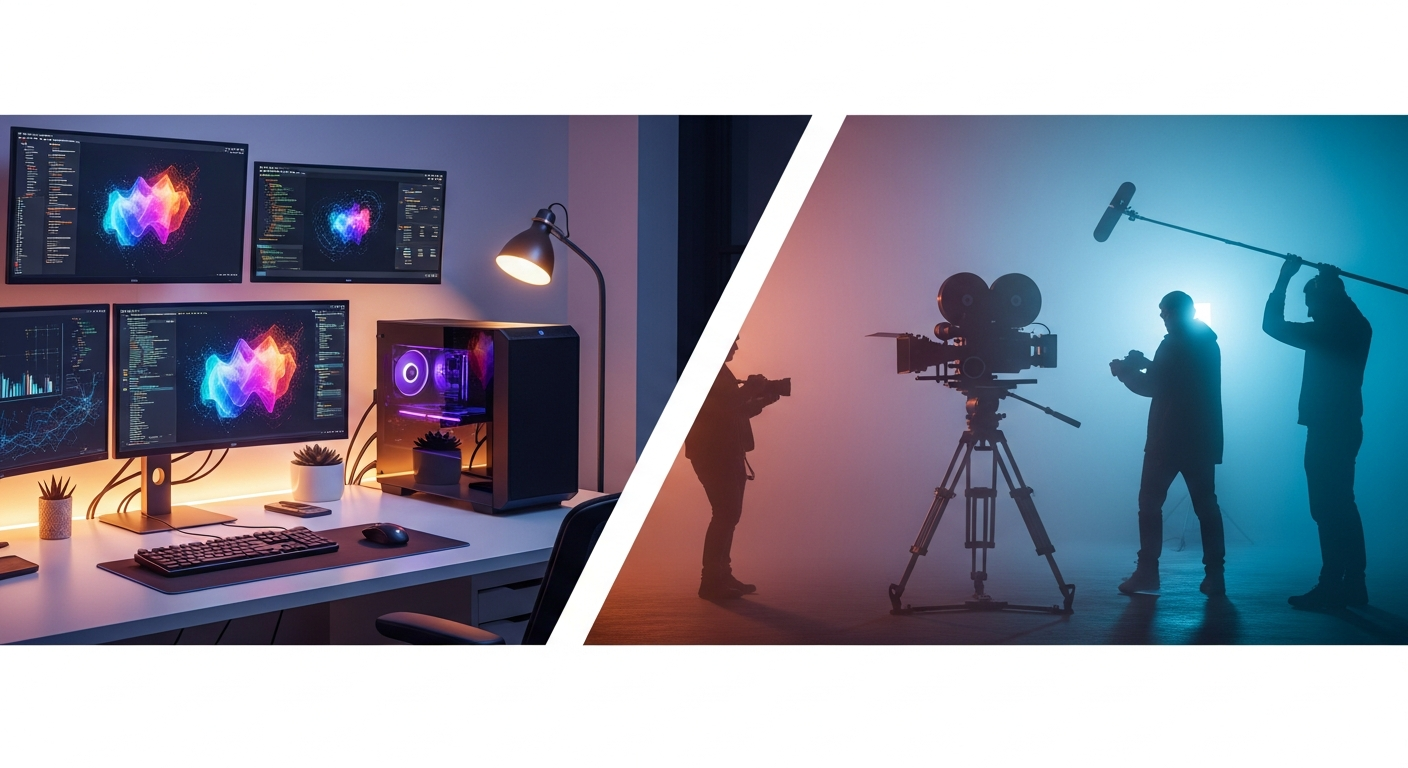
If you’re trying to decide between AI and a traditional shoot for a specific project, see the side-by-side in AI vs traditional video production: 7 differences that matter.
How to choose an AI video production partner — 8-point checklist
The label “AI video production” has been adopted by everyone from one-person freelancers running a single prompt through Runway to legitimate studios with full pipelines. Use this checklist when evaluating a partner:
- Documented workflow. Can they walk you through their five-stage pipeline and name the tools at each stage?
- Shipped portfolio. Not just demo reels — production work for paying clients in your category.
- Rights & licensing. Who owns the output? Are the models commercially licensed? Are music and voice rights cleared?
- Disclosure policy. Will they mark AI-generated content per platform rules (Meta, YouTube, TikTok all now require it)?
- Revision model. How many rounds are included? What counts as a revision vs. a re-brief?
- Turnaround SLA. First draft in X business days, final in Y — in writing.
- Quality safety nets. Human review checkpoints at script, generation, and final cut.
- Pricing transparency. Published tiers or clear quotes, not “it depends” pricing.
Ready to ship your first AI video?
Tell us the brief and we’ll quote a turnaround and a fixed price within 24 hours. 500+ projects shipped, 150+ clients, 50M+ views — and a studio that treats AI as a workflow, not a shortcut.
The legal & ethical guardrails
2026 is the year AI video stopped being a wild-west experiment and started being regulated. Three things every marketing team should know:
- Platform disclosure. Meta, YouTube, TikTok, and LinkedIn all require AI-generated or AI-altered content to be labeled. Most platforms now apply labels automatically via content credentials.
- Content provenance (C2PA). The Coalition for Content Provenance and Authenticity standard is now embedded in major camera and editing tools. Expect “content credentials” to become as standard as image EXIF data.
- Likeness & voice consent. Using a real person’s face or voice — even a synthetic version — requires written consent in most jurisdictions. The EU AI Act and similar regulations in India, the US, and UK are explicit on this.
The full handbook on this is in The ethics of AI video production: deepfakes, disclosure & trust.
Where AI video is going (the next 18 months)
Three trends to watch:
- Long-form coherence. 60-second to multi-minute clips with stable characters and continuity are arriving fast. This unlocks short films, full explainers, and episode-length content without stitching.
- Real-time generation. Sub-second video generation enables interactive ads, personalized openers, and AI-driven streaming — the next aesthetic after vertical short-form.
- Local-language dominance. India, Indonesia, Brazil, and the MENA region are leapfrogging on AI dubbing and voice cloning, making per-market localization economical for the first time.
For a deeper look at the India market specifically, see AI video production in India: 2026 industry report and How AI is transforming Indian film & TV production in 2026.
FAQ — AI video production
What is AI video production?
AI video production is the use of generative artificial intelligence across the video creation pipeline — scripting, storyboarding, footage generation, voice, music, and editing — to produce video assets faster and at lower cost than traditional production.
How much does an AI video cost in 2026?
A templated 15-second social ad starts around $300. A bespoke 30–60-second marketing spot ranges $2,000–$8,000. A 90-second SaaS explainer typically runs $3,000–$12,000. Brand films and long-form documentaries scale into the $15,000–$50,000+ range. Length, talent, languages, and revision rounds drive the spread.
How fast is AI video production compared with traditional?
Roughly 3× faster end-to-end for comparable output. A campaign that took 4–6 weeks traditionally now ships in 1–2 weeks. Some templated formats (social ad variants, product cuts) ship in 2–5 days.
Is AI video production good enough for brand work?
For marketing, performance ads, social, explainer, and product video — yes. For hero brand films and emotional storytelling, the best results today come from hybrid workflows: AI for B-roll, motion graphics, and finishing; live action for primary performance.
Who owns AI-generated video output?
Ownership depends on the model’s terms of service. Most commercial AI video tools (Sora, Veo, Runway, Kling) grant the user broad commercial rights to outputs. Always check the licence — and confirm with your production partner that the entire pipeline (including music and voice) is cleared for commercial use.
Do I have to disclose that a video was made with AI?
Yes — on most major platforms in 2026. Meta, YouTube, TikTok, and LinkedIn all require AI-generated or AI-altered content to be labeled. The label is often applied automatically when content credentials (C2PA) are embedded. Beyond platform rules, regulators in the EU, India, and US require disclosure for political and likeness-based content.
Can AI video production handle non-English languages?
Very well. AI voice and dubbing tools cover 40+ languages with native-quality output, including major Indian languages (Hindi, Tamil, Telugu, Bengali, Marathi). One source script can ship as 10+ localized variants without re-recording.
What should I ask an AI video production company before hiring?
Walk through their five-stage pipeline, named tools, sample of shipped client work in your category, rights and disclosure policy, revision model, turnaround SLA, and transparent pricing. If any of those answers are vague, keep looking.